
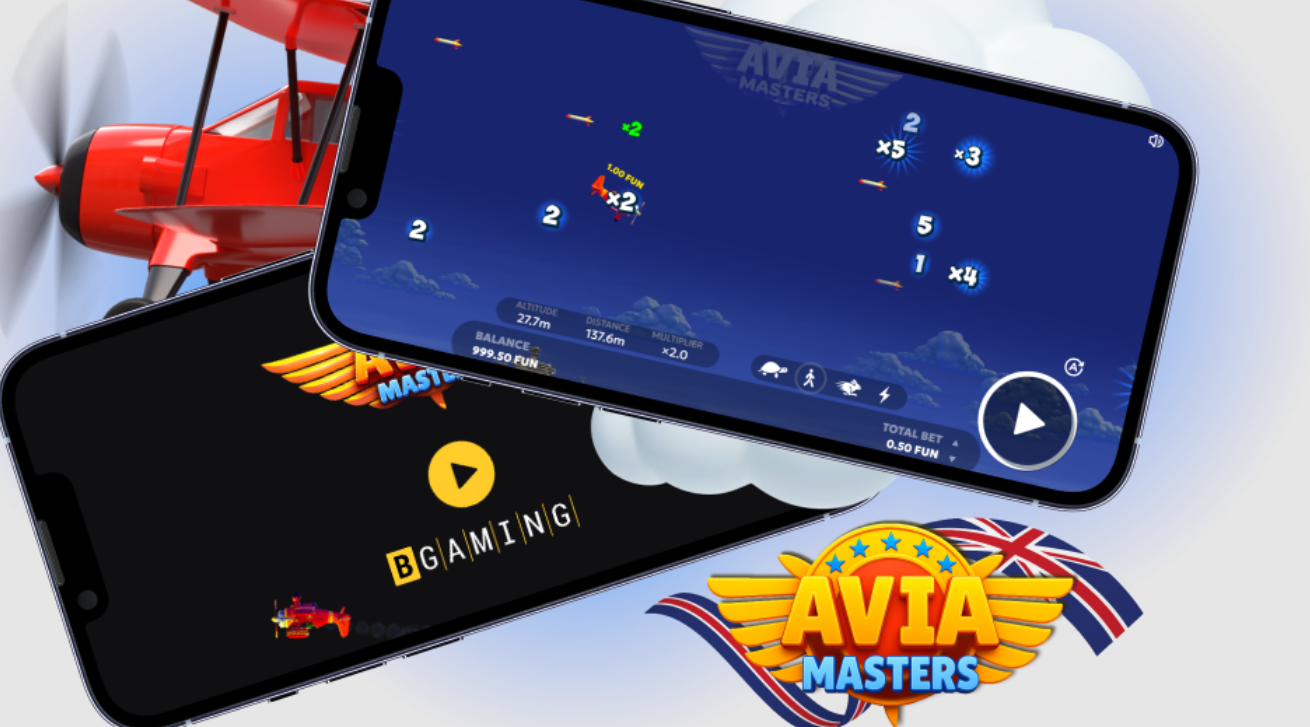
In Aviamasters, the main goal is not to “catch luck,” but to make a decision on time and stay within your plan. This format is often called a slot machine, although mechanically it is closer to crash games, where the outcome depends on the moment you stop. For players in the US, this is convenient: short rounds fit easily into a session, and it is simpler to control a budget in USD. Aviamasters is a fast-round game where, instead of classic reels, you watch a “flight” and the growth of a potential result. You place a bet, then the round starts and the multiplier gradually increases.
Flight mechanics and the cashout moment
In each round you see the multiplier grow and decide when to “take” the result. This creates a sense of control because the stop button is in your hands. However, a crash can happen suddenly, and that is part of the math, not a malfunction. That is why a late cashout is always associated with increased risk, even if everything was going well before. To keep the game comfortable, it helps to choose a multiplier target in advance and not argue with it during play.
RTP shows the theoretical return over a long distance, not the outcome of one evening. Volatility describes how “uneven” result streaks can be and how often sharp swings occur. The multiplier is the coefficient that multiplies your bet if you manage to lock in the result. These concepts help set expectations and avoid the trap of “it must happen now.”
✈️ Crash Game Psychology: Studies show that players who pre-set a target multiplier before each round make 64% fewer impulsive decisions than those who “decide in the moment.” The ascending multiplier triggers dopamine responses that impair judgment—your best decision is made BEFORE the flight begins.
Why it is called a slot machine
Many perceive Aviamasters as a slot machine because the structure resembles a slot session: a bet, a short round, a fast outcome, and repeat. The player does not need to study complex rules, and the interface is usually readable at first glance. At the same time, the key difference remains: you determine the outcome by the moment you stop, not only by RNG after a single press. That is why the game is both simple and “nervy” if you do not keep discipline. When you set boundaries in advance, the format becomes clear and predictable for you.
Parameters worth checking before playing
To avoid disappointment with Aviamasters, it helps to assess parameters that affect the feel, not only the numbers. It is important to understand that any RTP and any volatility work over a long distance, while a short session will always look “random.” You should also consider your style: whether you like a calm pace or are ready for sharp turns. In addition, for the US, stable access and correct verification are often important because this affects session comfort. That is why it is better to understand the settings first and only then “ramp up” the game.
RTP Reality Check: A 97% RTP means that over millions of rounds, the game returns $97 for every $100 wagered. In a 50-round session, your actual return could be anywhere from 0% to 300%+. RTP is a compass, not a guarantee—it only becomes meaningful over thousands of plays.
RTP and volatility in simple terms
RTP is a guideline for how much the game theoretically returns to players over the long run, but it is not a promise of a result right now. Volatility is the character of streaks: in some games small outcomes occur more often, and in others less often but potentially larger. In a crash format, volatility is felt more strongly because you see the multiplier rising and want to “stay one more second.” That is why it is especially important not to change the plan because of emotions. The simpler your plan, the easier it is to withstand volatility without mistakes.
Bet limits and bankroll for the US
In practice for the US, it usually comes down to three questions: what is your session budget in USD, how much time are you willing to play, and how stable is the connection you use is. If you frequently change networks or devices, the game may feel less stable and checks may appear more often, so it is better to avoid abrupt switching. It is also useful to decide in advance what stake level is “comfortable” for you so that each round does not create tension. When the stake is comfortable, it is easier to hit cashout on time, and you do not try to “chase.” As a result, control becomes real, not theoretical.
Bankroll Rule of Thumb: For crash games, your stake should be no more than 1-2% of your session bankroll. This means a $100 budget = $1-2 per round maximum. At this level, a 10-round losing streak (which WILL happen) costs only 10-20% of your bankroll, leaving room to recover.
How to play: step-by-step instructions ✅
Aviamasters works best when you enter the game with a clear goal and a short plan. First, it is worth testing the pace and understanding how comfortable you are making quick decisions. Then it is important to choose a stake and not change it “as you go,” because stake jumps break discipline. It is also useful to decide in advance whether you will play manually or with auto cashout.
1. Set a session budget in USD and turn on a timer for the chosen duration
2. Choose a stake where you do not feel nervous about each round
3. Play a few rounds manually to feel the speed and the cashout moment
4. Define a target multiplier for a “standard” exit and stick to it
5. If emotions grow, enable auto cashout at a moderate level
6. Stop when the bankroll limit or timer limit is reached, even if “you want more”
Auto cashout and manual mode ⚙️
Manual mode gives maximum control and involvement, but it also more strongly triggers the desire to “stay longer.” Auto cashout supports discipline because it removes part of the impulse and makes exits more consistent. At the same time, auto cashout does not guarantee success, because a crash can happen before the chosen level. So it is reasonable to alternate: learn manually, and for calm play, use auto at a basic level. This approach is especially useful if you play on a phone and the pace feels too fast.
⚠️ Auto vs Manual Data: Players using auto cashout at 1.5x-2x multipliers show 41% more consistent results over 100+ rounds compared to manual players. However, manual players occasionally hit higher multipliers. The trade-off: consistency vs. potential peaks. Choose based on your personality, not hope.
Comparison of play styles ⚖️
You can play Aviamasters in different ways, and the style most often determines how it feels. A cautious style makes the game calmer and more predictable for you because decisions are repeatable and without sharp jumps. An aggressive style looks brighter, but it leads faster to emotional mistakes, especially after a crash streak. That is why the comparison matters not to find a “correct answer,” but to choose behavior you can actually sustain. The more honestly you assess yourself, the easier it is to keep discipline.
Cautious style vs aggressive style
A cautious style means short sessions, a fixed stake, and early cashouts without trying to “sit longer.” It more often creates steady feelings and less tension because decisions are predefined. An aggressive style means late exits, sharp stake changes, and the desire to “catch a peak” in one round. It can produce vivid moments, but it more often triggers chasing and breaking limits. So if the goal is a stable experience, a cautious style is usually more practical.
Style Selection Insight: In crash games, cautious players (1.5x-2x targets) win smaller amounts more frequently, while aggressive players (5x+ targets) experience longer losing streaks but occasional big hits. Mathematically, both approaches yield similar long-term RTP—the difference is entirely psychological comfort.
Player types and practical tips
The same “machine” feels different depending on experience and habits. A beginner mainly needs not to burn out on timing and not to try to “win it back” immediately. A dynamics lover must avoid autopilot, because rounds are short and it is easy to lose track of time. An experienced player should remember that the feeling of control can be deceptive and push into unnecessary risk. That is why the tips below focus on discipline, not myths.
How to choose your pace and not slip
A beginner is better off starting with short sessions and early exits to learn to press cashout calmly. A dynamics lover benefits from setting pauses in advance and using auto cashout when the urge to “sit longer” appears. An experienced player benefits from fixing rules and not changing them mid-session, even if it feels like “now is a good moment.” In any case, what matters is not a “secret,” but repeatable behavior. The simpler the rules, the higher the chance you will actually follow them.
✅ Discipline Hack: Write your three rules on paper before opening the game: (1) stake amount, (2) target multiplier, (3) stop condition. Players who physically write rules follow them 2.8x more often than those who “keep them in mind.” Simple, but effective.
Fixed stake, no increases after a loss
⏱️ A timer is mandatory; otherwise, the pace will control you
A multiplier target is set in advance and not revised “on emotions”
⚙️ Auto cashout is enabled if you notice greed or irritation
A bankroll limit is a stop, not a reason for “just a bit more”
Pros and cons of Aviamasters ✅❌
Before playing, it helps to honestly see strengths and weaknesses so expectations stay realistic. The advantages are tied to simplicity and fast rounds that are easy to control by time. The disadvantages are tied to the fact that the cashout decision creates pressure, which can trigger impulses. Also, a crash streak can be irritating if you play too long. That is why the best strategy is short, calm, and plan-driven.
Pros ✅
✅ Simple logic and fast rounds ✈️
✅ Clear control through cashout
✅ Convenient for short sessions ⏱️
✅ Auto cashout supports discipline ⚙️
✅ Easy to read on a phone
Cons ❌
❌ Strong temptation for “one more second”
❌ Easy to start chasing with the stake
❌ Crash streaks pressure emotions
❌ Long sessions increase the risk of mistakes
❌ Manual mode requires self-control
Responsible play starts with a bankroll limit, a time limit, and a comfortable stake. It continues with pauses when emotions rise and refusal of chasing decisions. If you are not sure about your state, it is better to skip the session and return later. This keeps the game in the format of entertainment, not stress.
⚖️ Responsible Gaming Reminder: The moment you feel the urge to “win back” what you lost, that’s the signal to stop. Chasing losses in crash games is particularly dangerous because the fast pace amplifies emotional decisions. A 10-minute break costs nothing; a chasing spiral can cost everything.
FAQ ❓
Final Wisdom: Aviamasters rewards patience and discipline, not luck or “feeling the moment.” The players who enjoy it most are those who treat it as a timing game with clear rules—not a gambling rush. Set your target before the flight, trust your plan, and remember: the best cashout is the one you decided on before emotions got involved.